
10 Days in the Pinuya Village
Seven bumpy hours by road from Rio Branco, in the Amazon jungle near the banks of the River Tarauacá, lies Aldeia Pinuya. Aptly named "hummingbird" village, it's one of the smallest independent indigenous territories in Brazil and is home to around 260 Huni Kuin people. For about 10 days last year, it was also mine.
That 11-hour flight was humbling. There's nothing quite like being suspended in the vast non-space at 40,000 feet to give you perspective. I'd bounded into 2024 with resolutions and the best intentions, but by the time I boarded that plane, I couldn't see the forest for the trees of my mid-20s personal drama. There was no doubt the year had gone awry. Crammed full of anxiety and noise, my London ego started to jig in double time and didn’t stop until long after touchdown.
The Pinuya village lives at the entry point of the jungle, still accessible without a boat. Even so, I was immediately struck by the land's strong energy. By the murmur of all the footsteps that had passed through before, the whirr of ancient spirits that surrounded the trees and their deep roots. Struck by the mosquitos, so small, you barely notice them until you're scratching yourself into a fever at night. Struck by the rain, when it comes, thick and relentless, pouring down until the ground swells into sticky, clay-like mud that clings to your boots. By day three, I gave up and started walking barefoot. That earth seemed to have a spirit of its own, seeping into everything: my clothes, my bags, my thoughts.
On our first night, we had dinner at Chief Kaxinawa's house. Head of the village, Pajé, and father to (rumor has it) 32 children, he hosted us and all our meals. The biggest house in the village, with the brightest walls and the only wifi reception, this was the central social hub. Soon, our days fell into rhythm. We'd wake early to breakfast: tapioca, couscous, eggs, sometimes fruit. No matter how early you rose, you were never first. "Indigenous people don't sleep," one of them told my friend on that first morning, and it seemed to be true. There was always life at the big table, always chord being strummed. Pop your plate in the back kitchen when you’re done, “Obrigada!” and notice the women in the kitchen already preparing lunch. See the enormous fresh fish on the table, full of bones and spiky teeth, fished one of the ponds just down the hill. The day would pick up then, as we observed the different pieces of their culture they were choosing to share with us. In the afternoons sometimes one man, Sia, who lived a few houses away would come by to our cabin and teach us songs in exchange for use of our guitar.
Twice a day, we could receive plant baths from Maspa, one of the village women. With deep brown eyes and a wide smile, we were saddened to learn later she'd recently arrived with her family after losing everything in a fire at different village. It's happening more frequently- climate change bringing increased fires and flooding, making jungle life increasingly unpredictable. So we pooled our tips and were grateful as she poured hot water infused with plants and prayers over us.
On one of those days, she instructed me to "tomar, tomar." Barely fluent in Portuguese, I understood "drink." Drink the bathwater? That didn't feel right. Then again, it was fresh water with herbs... kinda like tea? I took a sip, looked up and immediately knew this was one of those lost-in-translation moments. Later, my Brazilian friend laughed lovingly at my expense: "What do you mean you drank the bathwater?"
Nearly every other night, we would sit alongside them in ceremony- drinking ‘nixi pae’ and healing, seeing, feeling, purging.. Touching the face of the infinite for a moment, dancing between earth and sky. Visitors from other villages would come to share their prayers through music and chants. No matter how deep our journeys went, we'd be encouraged to stand up and come together to dance together in a line. Winding the shape of the jiboia (boa) around the fire, as the txchanna (singers) played tirelessly and the pajés provided healings until the sun came up. Then they would take their children to school and we'd stumble to breakfast, falling into our tapioca rolls and butter, exclaiming different versions of "wow, God is real."
On our first day, as an introduction we were gathered to have our bodies painted using a traditional plant dye. By the time we walked to our last ceremony, it was already starting to fade. The next day, we exchanged gifts. My tokens: hair bows and cigarette papers, coloring books and pencils felt impossibly small compared to the feathers and handmade jewelry I received, on top of everything else we'd been given energetically throughout the week.
By the end of my time there, I felt a thawing in my spirit. My mind like a wax figure with a gentle flame to it, starting to lose its hardened preconceived beliefs and expectations. When I returned home, across buses and planes and a freezing tube from Heathrow, everyone asked, "How was Brazil? What did you do?" I'd tell them about the mud, the ceremonies, the mosquitoes, but it never felt like enough. Softened by the widening of my perspective, I had come for the forest and the river, but it was more than anything a meeting with people. A people who had no choice but to do the same, through the ongoing horrors of colonisation, to adapt while keeping what was precious to them.
The world is vast and overwhelming. Eight billion people share a beautiful planet with the bloodiest of histories. The full spectrum of human emotions are there for us to experience and fall into and honor every day. There are as many combinations of personalities, dreams, preferences, and fears as there are people. Existence- it's everything everywhere all at once, and it will swallow you whole if you don’t have a centre to cling to.
In the midst of it all, the Huni Kuin offered a new invitation: so alegria. Only joy. As our true nature, as the path of oneness. A soft battle cry. Could it be so simple? Perhaps not easy, but simple.
It's been a year now. The body paint has long faded, and the mosquito bites are gone. But this week, I watched the dozens of indigenous protestors force their way into COP30 in Belém, memories of this stay came back more vividly. Then, in more photographs from the protests within city, I recognized Shaya- one of the chief’s daughters, a 23- year-old mother of two, and one of the most powerful voices I have ever heard, holding a banner at the march.
"Today we are witnessing a massacre as our forest is being destroyed," one elder, Benedito Huni Kuin, told reporters. I'm writing this because those 10 days changed my understanding of the world, and the people now fighting to protect it.
O futuro é indígena
Só Alegria
What would a world that led from this place look like?

Mawa Isa Keneya leader Sâmia Biruany , applies traditional body paint to my friend Maddy
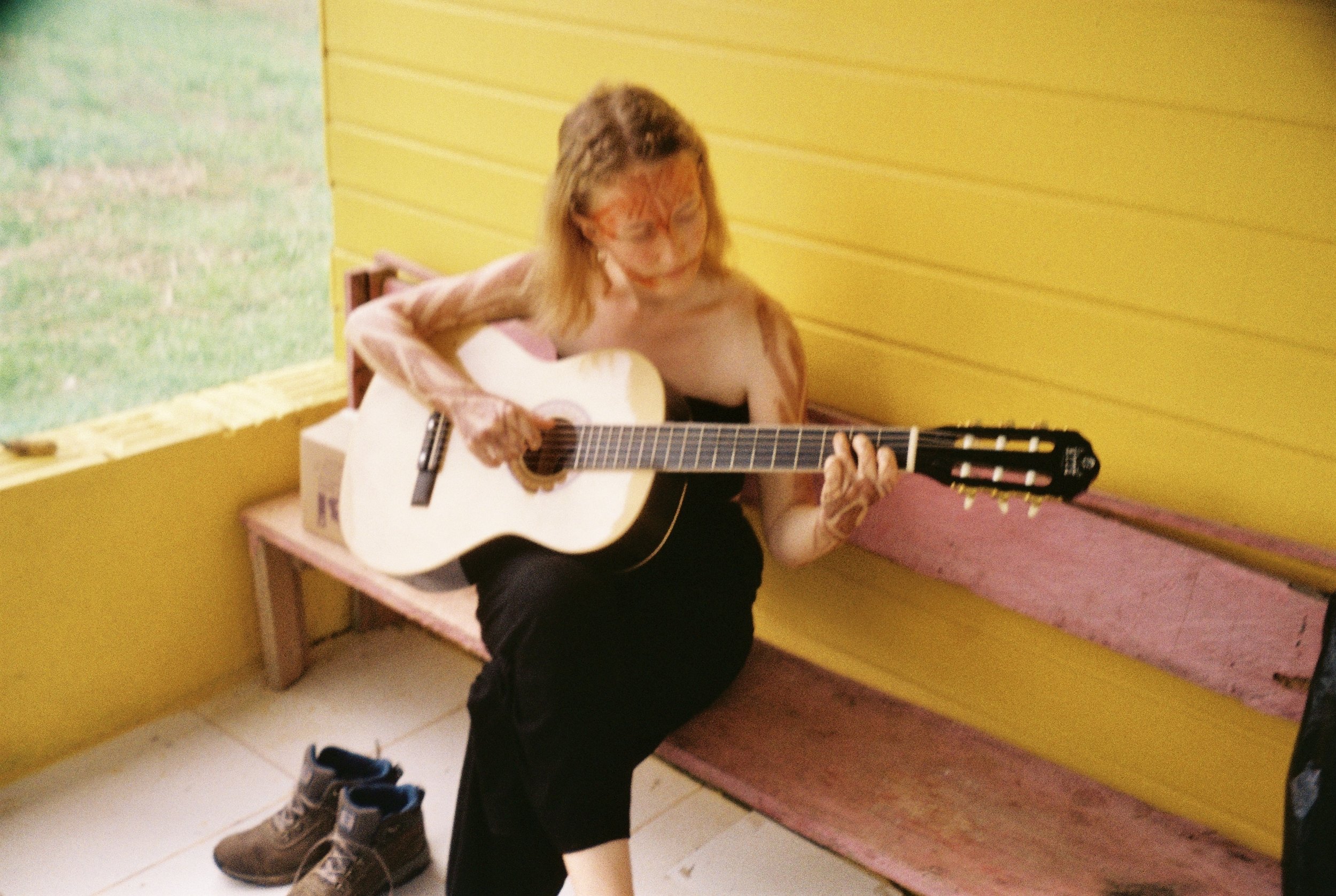
Lucie, freshly painted & practicing!


Cafe da manha: music at 7am, rapeh at the ready

Sweet friends Gia, Juliana and Maddy
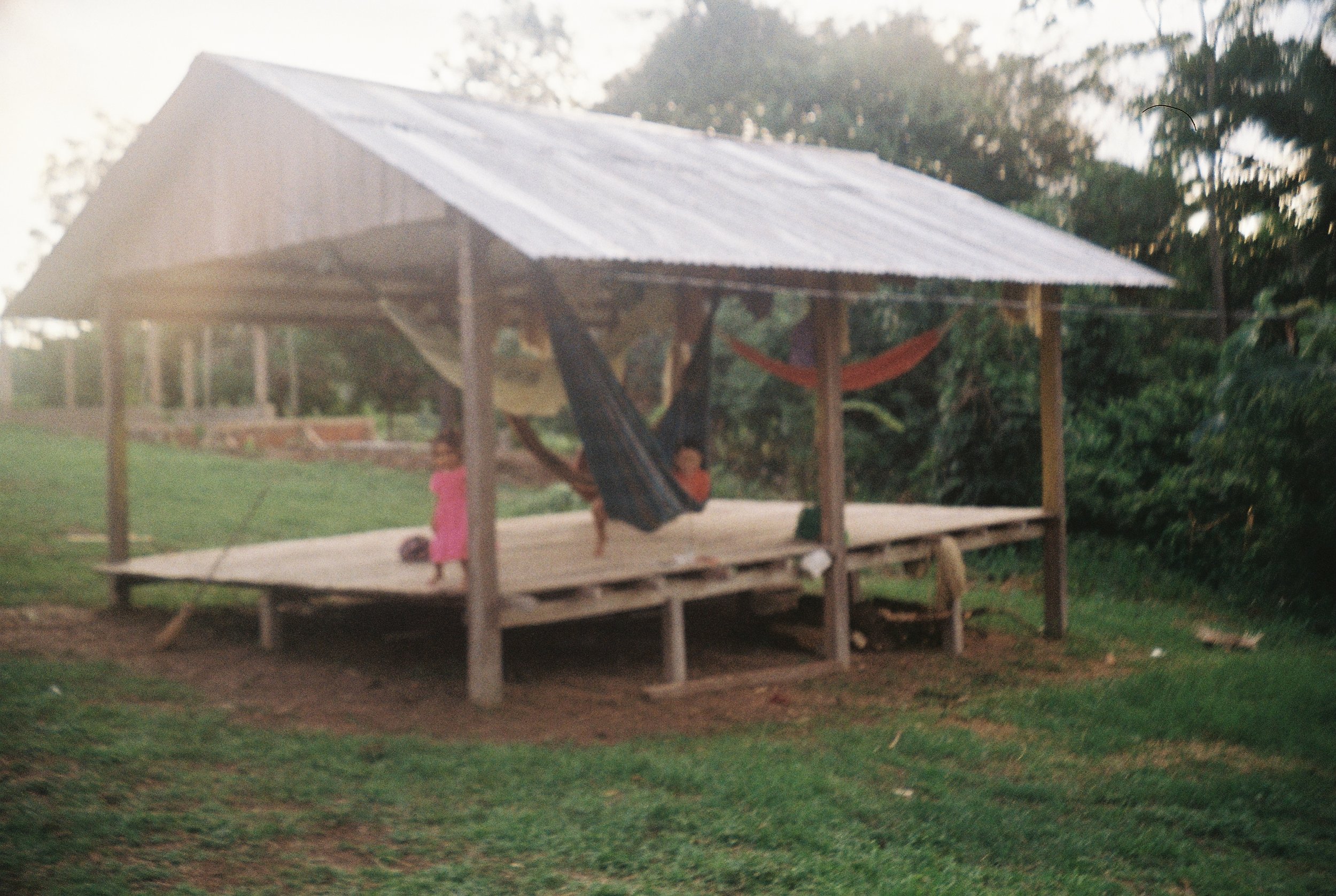
The children's hammock area

Sîa coming to teach us songs in the afternoon
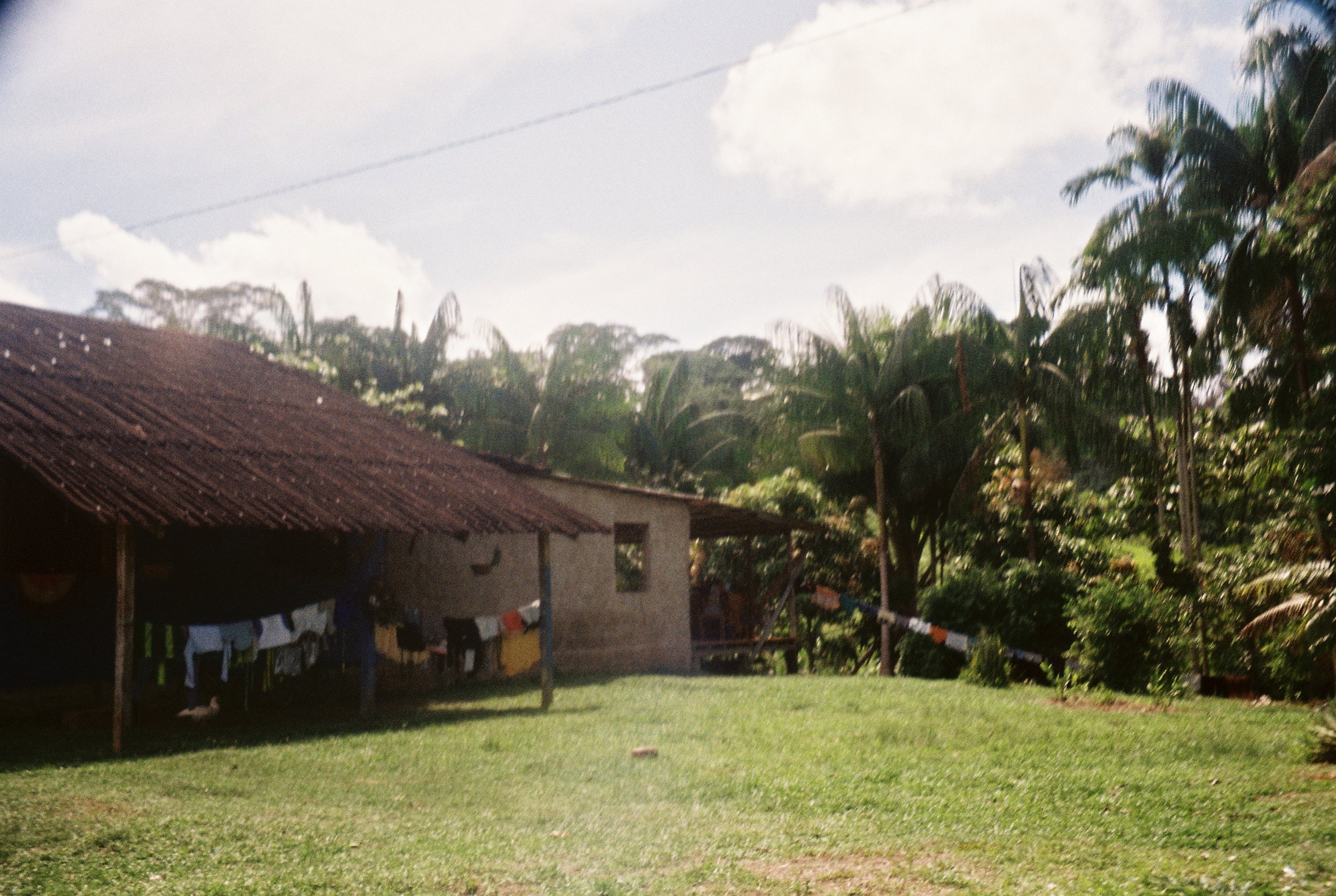
One of the homes in the village

The beautiful Maspa, who gave us plant baths morning or night
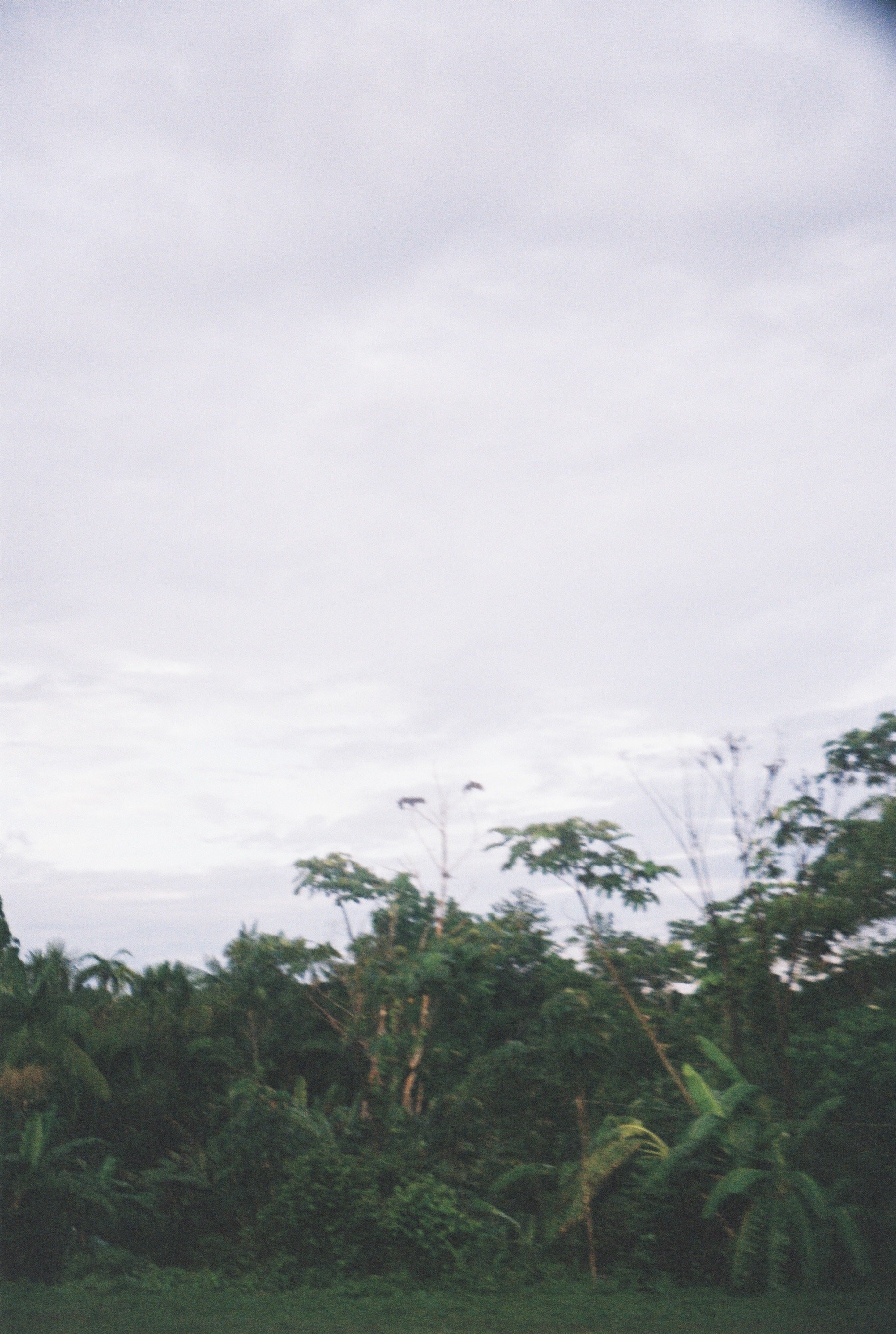
Two Urubú birds (amazonian black vultures) who came to dry their wings with us, the morning after a strong and powerful ceremony.

The sacred fire and altar for the 'jiboia' (Boa Constrictor) snake- one of the two important animal symbols (alongside the Jaguar) in the ceremonies in Pinuya.

The women of Mawa Isa Keneya (village women's group) playing for us.

Getting dark, one kid still hanging out

Maspa's lovely grand-daughter

Two boys and their colouring book

Maddy and Ali practicing before ceremony

The edge of the lake: home of dinner's bony fish!

One of the homes in the village

.... And so, the sound of strumming was heard all throughout the village!
Links
Fundraiser for womens-only Shubuã (sacred space): https://gofund.me/5d75c16c